

WooCommerce has let an AI assistant read and update your products and orders since version 10.3, which shipped as a beta on November 3, 2025. Ask Claude, ChatGPT, or any other Model Context Protocol (MCP) client to list the orders stuck in processing, update a stock count, or drop a note on an order, and with the right setup, it can actually do it today. That setup has already changed once since November 2025, and it is about to change again with WooCommerce 11.3. Let’s go through what’s live right now, what it takes to connect safely, and what the next release breaks.
We’ve already walked through how to wire an AI agent to WordPress itself via MCP, and through the three building blocks that make any of this possible in the first place. WooCommerce is a different case. It’s the first time we’re looking at an AI agent inside a live store, touching real stock counts and real customer orders, not blog posts or pages. That changes what “safe” means here.
What can an AI assistant actually do in your store today?
As of today, the official WooCommerce MCP documentation lists a defined, fairly narrow set of abilities. On products: query with filtering and pagination, create, update, and delete. On orders: query with filtering and pagination, update order status, and add order notes. That’s the whole list. There’s no catalogue-wide bulk editing, no refund processing, and no payment gateway control exposed through MCP yet.
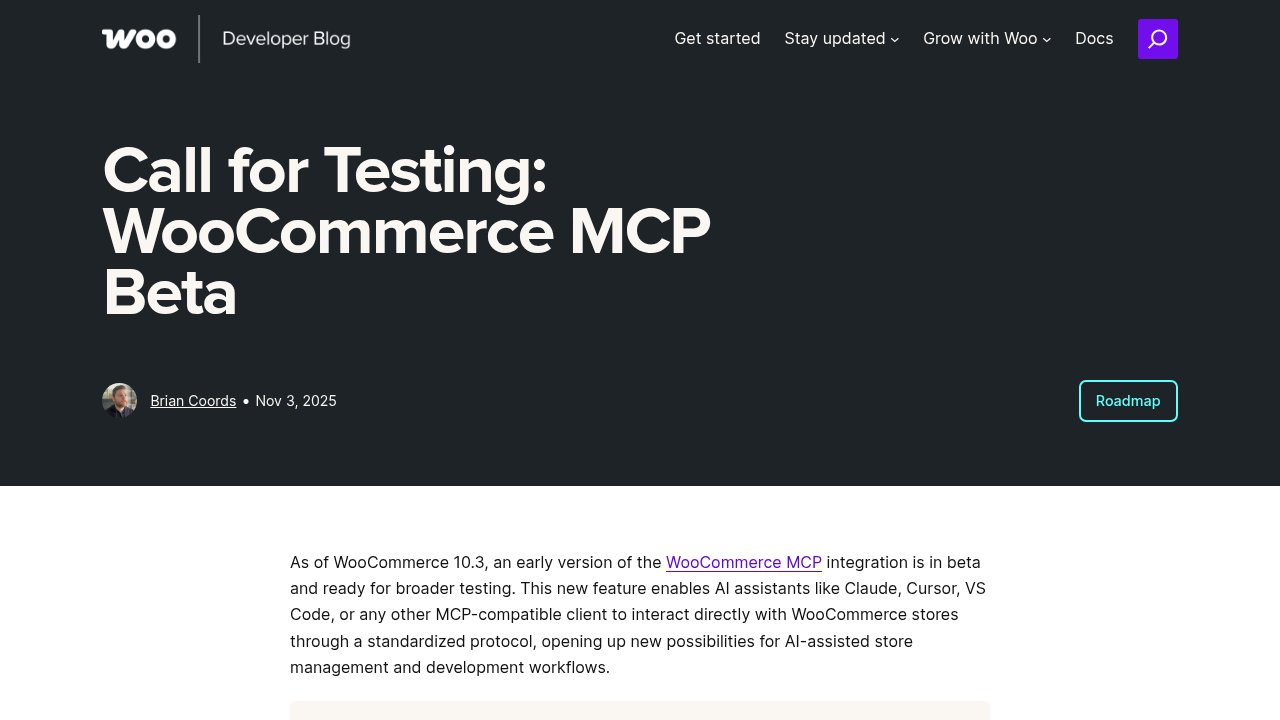
That list traces back to this post. On November 3, 2025, WooCommerce’s developer blog opened the MCP beta for broader testing, already tied to version 10.3. Authentication ran through standard WooCommerce REST API keys back then, and the exposed abilities were closer to thin wrappers around the REST API than a purpose-built permission model.
Where the “seven abilities” actually come from
If you’ve seen this tied to a different, more recent-sounding release, here’s the part worth getting right. No WooCommerce update the week of October 9, 2026 touched MCP at all. That week’s release fixed two checkout bugs, an address-field filter and postcode validation for a handful of countries, nothing more. The real milestone with seven abilities landed three and a half months earlier.
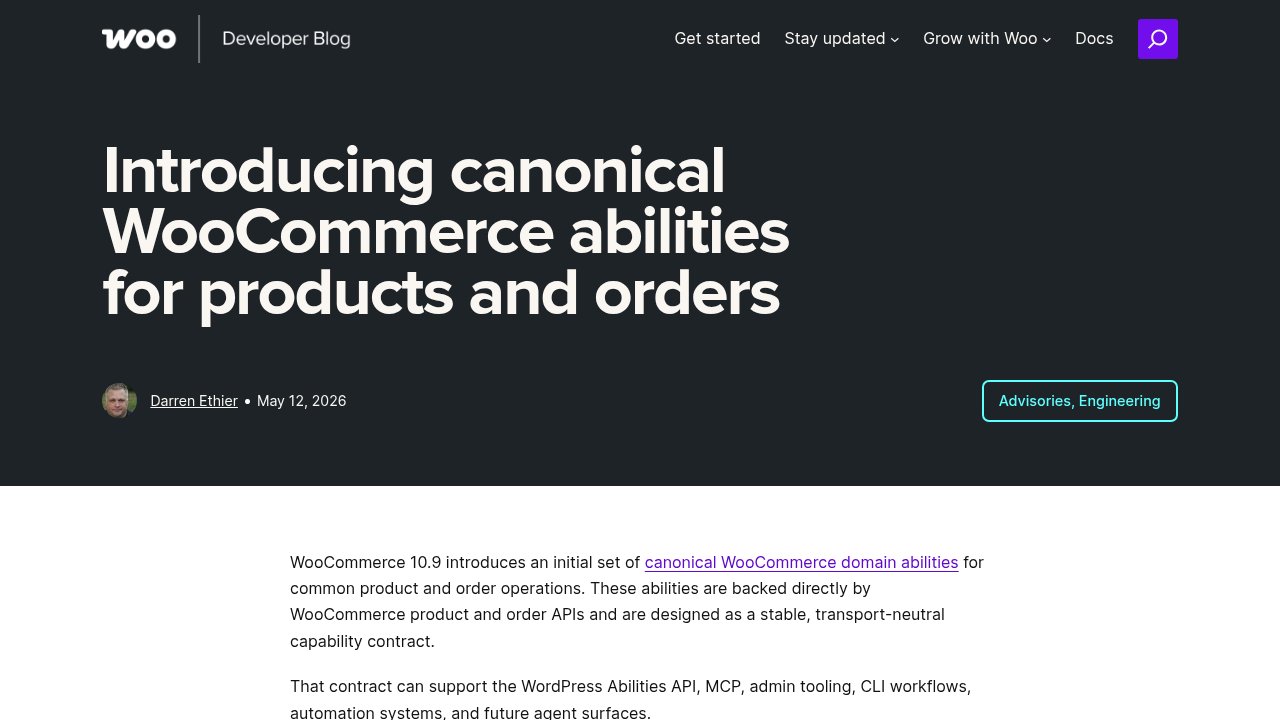
WooCommerce 10.9, released June 23, 2026, introduced seven canonical domain abilities built directly into the WordPress Abilities API: woocommerce/products-query, product-create, product-update, and product-delete for products, plus orders-query, order-update-status, and order-add-note for orders. WooCommerce’s own documentation is explicit about the distinction that matters here: “REST-shaped abilities are not the same as domain abilities.” The earlier 10.3 beta wrapped the REST API; 10.9 gave those seven actions a proper, permission-aware foundation.
WooCommerce MCP isn’t a feature any single release shipped. It’s an ONGOING developer preview: a REST-key beta in October 2025, a proper Abilities API foundation in June 2026, and a breaking change in the release due the week of November 9, 2026, which we’ll get to below.
Application Passwords, HTTPS, and the PII risk: who should actually try this
Remote MCP access doesn’t accept your WordPress account password. It doesn’t accept a WooCommerce REST API key either, not for anything built on the Abilities API path. It needs a WordPress Application Password instead, created from Users → Profile → Application Passwords, and shown to you exactly once. The connection itself has to run over HTTPS, so that password isn’t sent in the clear.
WooCommerce’s own documentation is direct about why. Order and customer operations can expose personally identifiable information, including names, emails, physical addresses, and payment details. The official recommendation follows from that risk: a dedicated account with only the capabilities the MCP client actually needs, not your main admin login. We already covered why Application Passwords deserve more caution than most site owners give them, and that advice applies directly here. An Application Password tied to a full-access account is exactly as risky as handing over that account, whether an AI agent is on the other end or not.

What changes with WooCommerce 11.3
WooCommerce 11.3 has been in beta since October 26, 2026, with a stable release scheduled for the week of November 9. An October 21 advisory on WooCommerce’s developer blog confirms the breaking change: the original /wp-json/woocommerce/mcp endpoint, the one still running standard REST API keys from the 10.3 days, is removed. Any request to it after the upgrade returns an HTTP 410 error pointing to the replacement.
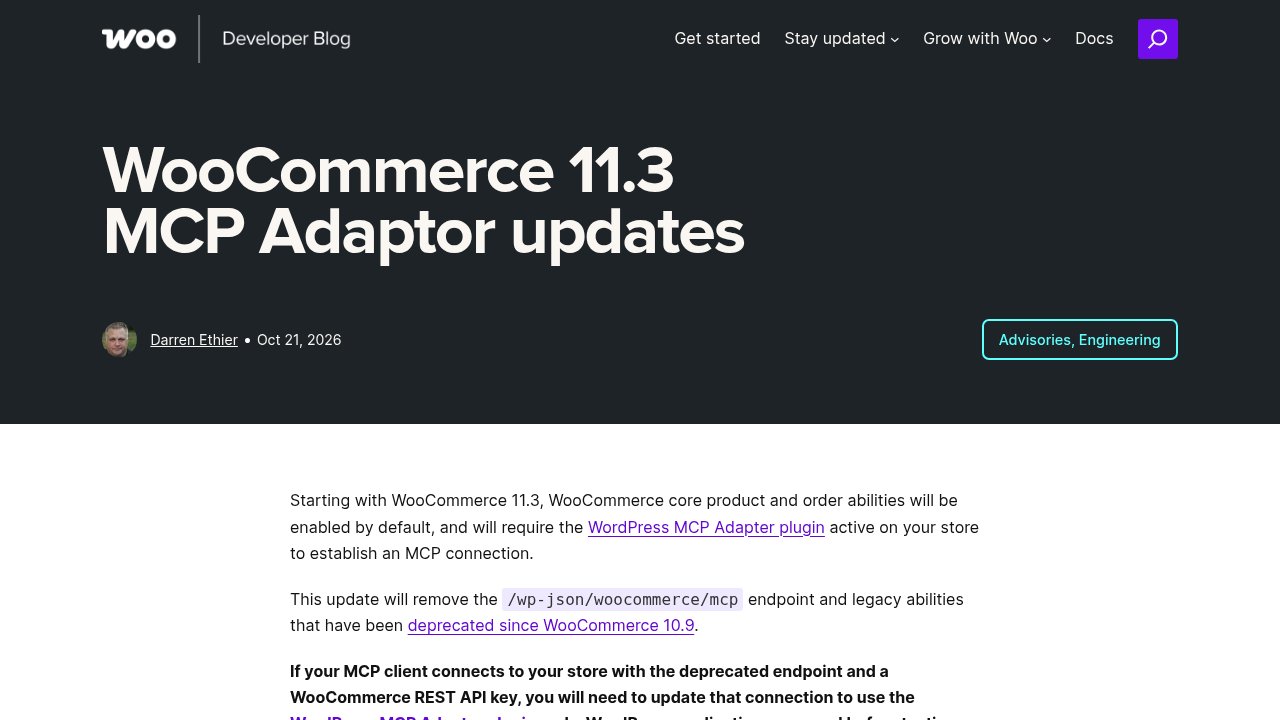
From 11.3 on, an MCP connection needs the separate WordPress MCP Adapter plugin active, its first WordPress.org release, version 0.7.0, and points to /wp-json/mcp/mcp-adapter-default-server instead, authenticated with an Application Password rather than a REST API key. WooCommerce’s core product and order abilities turn on by default once that adapter is active. A separate, experimental Extensible Abilities API, which would let other extensions add their own fields to those abilities, stays off by default.
Want more than core ships? Easy MCP AI covers WooCommerce too
WooCommerce’s own abilities cover products and orders and nothing past that. Easy MCP AI, a free plugin from Themeisle (Vertigo Studio), goes considerably further: more than 30,000 active installs, a 4.9 out of 5 rating, and over 280 tools in total. Forty-seven of those are specifically for WooCommerce, covering products, variations, orders, customers, and sales reports, on top of general WordPress content and SEO data pulled from tools like Google Search Console and Semrush.
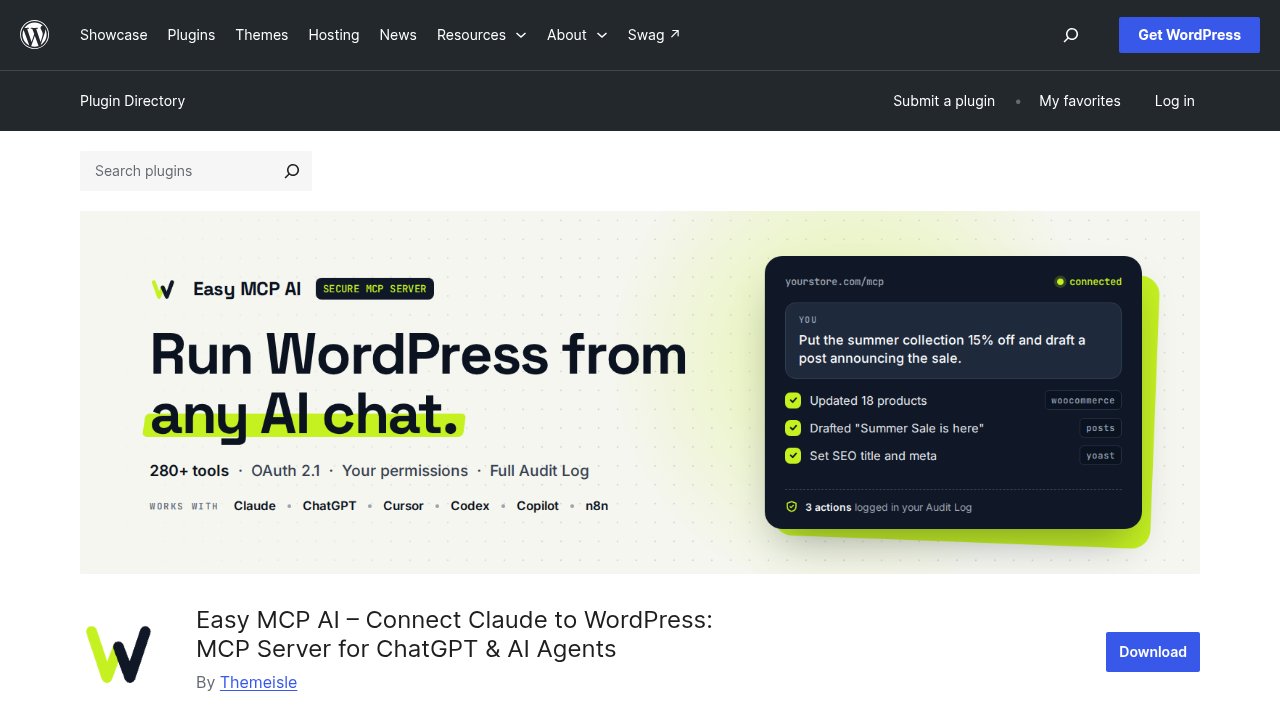
It’s a legitimate alternative if you want broader coverage today rather than waiting on core abilities to expand. It’s still a third-party plugin sitting outside WooCommerce’s own MCP work, which is worth weighing against the smaller, native surface described above.
Our take
Beyond the version-tracking, what’s actually there is a genuinely useful, genuinely narrow tool: enough to check stock and triage orders from a chat window, not enough to run your store unattended. Treat it like any new integration that touches real customer data: a staging store first, a dedicated account with minimal permissions, and a quick read of what the MCP client can actually do before you connect it to anything live.
If you’re just curious, start read-only against a staging copy of your store. If you already rely on the old REST-API-key connection, plan the switch to the MCP Adapter and an Application Password before WooCommerce 11.3 goes stable the week of November 9. And if core’s abilities are too narrow for what you need today, Easy MCP AI is the wider option to look at next.
This is the same foundation we described in the three building blocks that make WordPress agentic, just applied to a store instead of a page. Enjoy exploring it, carefully!