

On June 2, 2025, Yoast SEO added a one-click llms.txt generator to its plugin, free, no configuration required, becoming the first WordPress SEO tool to ship one natively. All in One SEO and Rank Math each followed within the year, and together the three plugins now sit on an overwhelming share of WordPress installs. We’ve already mapped the pieces WordPress ships on purpose for AI agents that act on a site, the Abilities API, AI Client, and MCP Adapter covered in our three building blocks piece. llms.txt sits on the opposite side of that split: instead of letting an agent act, it tries to tell one what a site’s content is actually about. Let’s walk through what each plugin added, and what Google itself has already said about whether any of it matters.
Three SEO plugins, one new file, one old idea
An llms.txt file is a Markdown document at the root of a domain, meant to summarize a site’s content for language models the way a sitemap summarizes it for search engines. Jeremy Howard, founding CEO of Answer.AI and cofounder of fast.ai, proposed the format on September 3, 2024: a required H1 with the site’s name, an optional blockquote summary, and H2 sections listing links. Howard published a v2 of the spec in August 2026, citing two years of real-world adoption. The update adds standard link relations so a client can locate the right file automatically, loosens the rules on Markdown file URLs, and drops the old idea of a dedicated tool that expands the file into full context: agents are now expected to read the list and follow the links themselves. Chrome’s Lighthouse auditing tool already checks for the presence of one as part of its audits, and at least one major AI lab, Mistral, publishes its own at its domain root, so the format has real users. The question for a WordPress site is whether having one changes anything.
Yoast got there first. Its generator lives behind a single toggle, regenerates automatically every week through WordPress’s own cron system, and ships in the free version of the plugin, not held back for a paid tier. No settings to tune, no post types to pick, just a file that updates itself once a week.

What AIOSEO and Rank Math actually added
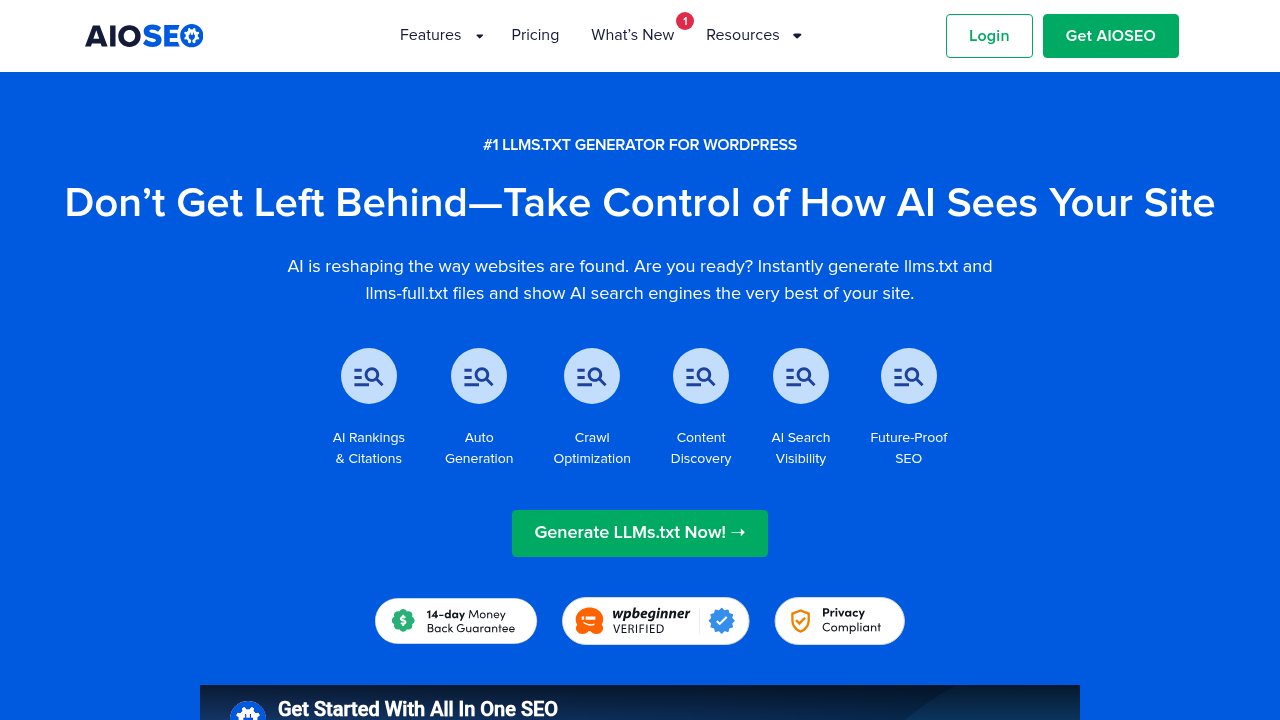
All in One SEO went further than a toggle. Its generator lives under Sitemaps, in its own LLMs.txt tab, enabled by default, and produces both a standard llms.txt and a longer llms-full.txt. You choose which post types and taxonomies to include, exclude specific pages or terms by name, and cap how many URLs appear per post type. A separate option converts individual posts and pages into clean Markdown for AI tools to read directly, going beyond what the file format itself requires.
Rank Math takes a different technical route. You enable an “LLMS Txt” module from the plugin’s main dashboard, then pick post types, taxonomies, and a maximum item count (100 by default) from General Settings. The difference that matters for a developer: Rank Math doesn’t write a static file to the server at all, it builds the page on the fly whenever something requests yoursite.com/llms.txt. Functionally a visitor sees the same kind of file either way, but it is a genuinely different way of shipping the same idea than the static files Yoast and AIOSEO write to disk.
None of the three plugins disagrees with the others about what the file should contain: titles, URLs, short descriptions, organized by post type. The differences are about control, how many items, which taxonomies, static or dynamic, not about the underlying bet each one is making.
Google already answered the question: it does nothing for Search
That underlying bet is what Google’s own AI optimization guide addresses directly, in a section literally called “Mythbusting generative AI search.” Google Search itself doesn’t use machine-readable AI text files, Markdown summaries, or llms.txt to decide what to show, and creating one will neither help nor hurt a site’s visibility or rankings, because Google Search ignores them. That is not a rumor or a third-party guess, it is Google’s documentation, last confirmed current as of July 10, 2026, roughly a year after Yoast shipped the first generator.
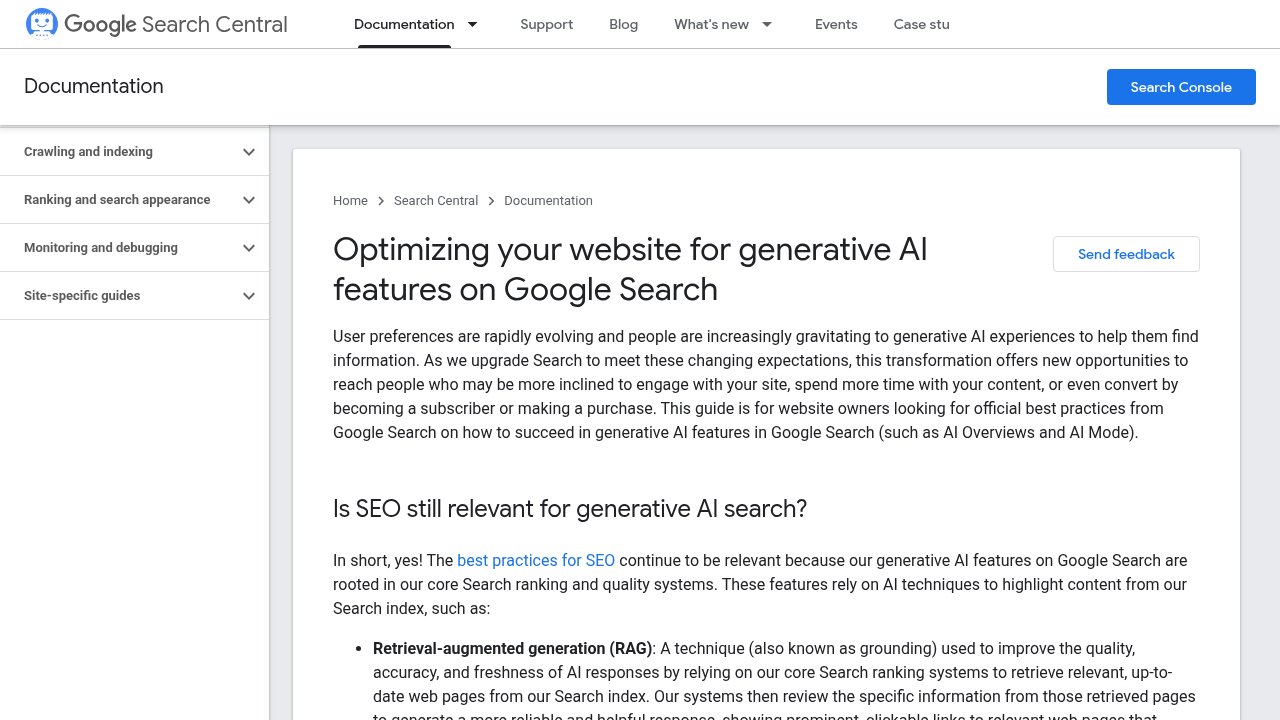
The nuance worth keeping: this is a statement about Google Search specifically, not about every AI system everywhere. Chrome’s Lighthouse tool still checks for an llms.txt as part of an audit, and a coding agent pointed at a URL can still read one if it happens to be there. Google’s position closes off one specific promise, better visibility in Google’s own search results, without saying anything about how a code assistant or a different AI product might use the same file.
So is anyone else reading it?
Google’s search engine is not the only possible reader, so the more interesting question is whether AI crawlers bother with the file at all. Ahrefs put a number on that in a study it published on June 15, 2026, pulling real server logs from 137,210 domains, of which roughly 38,000 published a valid llms.txt file. 97% of those files already online had logged zero requests the month before. We’ve been here before on this exact file format, with the exact same study, in our look at what Crocoblock’s JetGEO plugin actually controls; the number holds regardless of whether the plugin generating the file is free or a $55-a-year add-on.

Our take
Three plugins used by most of the WordPress ecosystem industrialized a file in about a year, and the company whose search results most site owners actually care about documented, in writing, that the file changes nothing for them. Enabling llms.txt costs a couple of clicks and nothing else; proving it changed anything for AI visibility is a different matter entirely, and nobody selling the feature has shown THE evidence for that yet. If you already run Yoast, AIOSEO, or Rank Math, turning it on is cheap enough that there’s no real argument against it, as basic technical hygiene rather than a visibility strategy. Treat it the way we treated JetGEO’s paid version of the same bet: look at your own server logs a month later before you count on it for anything more.
Photos: Mert Coşkun, Engin Akyurt / Pexels.