

On September 21, 2026, Mary Hubbard, Executive Director of WordPress.org since October 2024, announced that she is now president of the Open Website Alliance (OWA), representing the WordPress Foundation. We already walked you through WordPress’s decision to sign the Open Weights AI Letter, the moment earlier this year when WordPress first put its name on a piece of collective open source advocacy. Hubbard’s own announcement reads like the next chapter of that same story: WordPress isn’t just adding a signature to open source causes anymore, it is chairing the group that organizes them. Let’s walk through what this presidency actually covers, and why CMS platforms that compete head to head are the ones running it together.
What did Mary Hubbard actually announce?
Hubbard’s post is short and specific. She is now president of the Open Website Alliance, a position she holds on behalf of the WordPress Foundation rather than in a personal capacity. The title matters here: Hubbard became Executive Director of WordPress.org in October 2024, after roles at TikTok, eBay, and Walmart. She is not a WordPress founder and not an informal spokesperson picked for the occasion, she is the person who runs WordPress.org’s day-to-day operations, and this new role sits on top of that job.
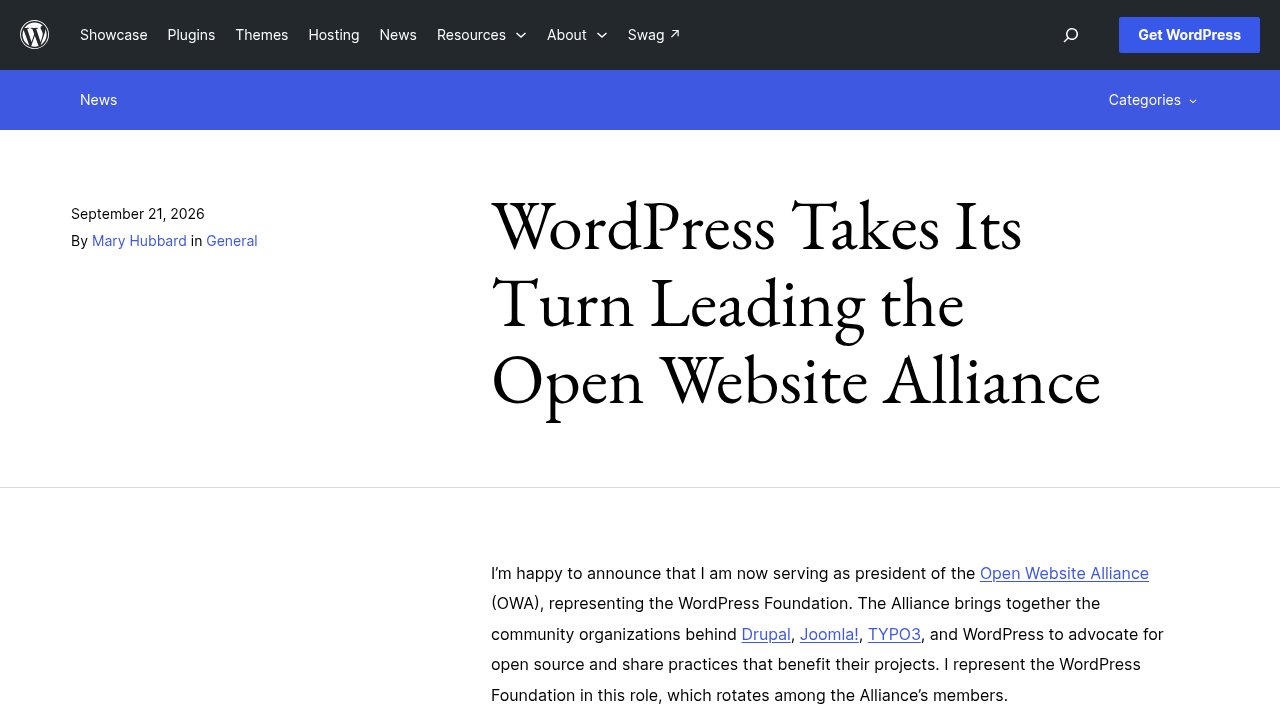
The presidency itself is ROTATING between the Alliance’s member organizations. WordPress does not own the seat permanently, and nothing in the announcement suggests otherwise. Treat this the way you would treat any organization taking its turn chairing a shared board: a role with a term attached, not a prize.
What the Open Website Alliance actually is, and isn’t
The OWA describes itself as “a community of communities,” and that phrase is doing real work: it brings together the community organizations behind four open source content management systems, not the software companies that sell services around them. WordPress is represented by the WordPress Foundation, Drupal by the Drupal Association, Joomla! by Open Source Matters, and TYPO3 by the TYPO3 Association. One affiliate, the FAIR Package Manager, sits alongside them with a seat at meetings but no vote.
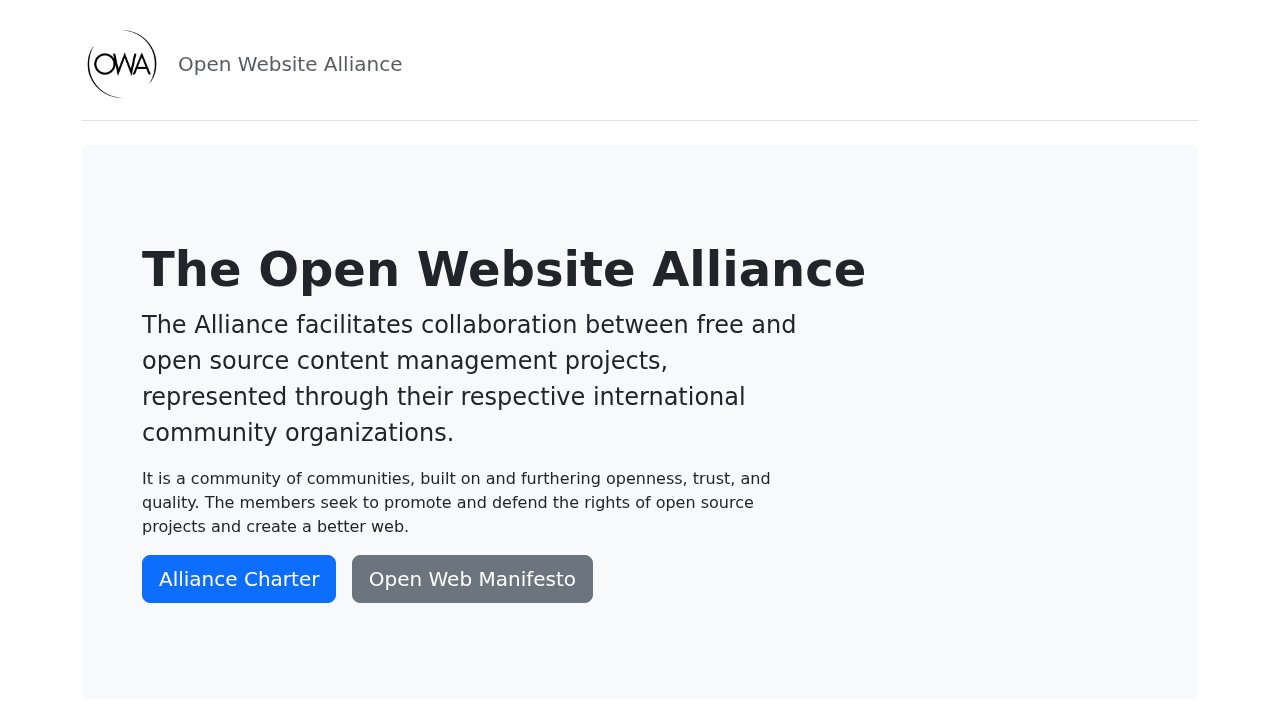
What the OWA is not matters just as much. This isn’t a merger, a shared codebase, or any kind of technical integration between WordPress, Drupal, Joomla!, and TYPO3. It’s an advocacy structure, governed by a Charter and an Open Web Manifesto, built to speak with one voice on issues that affect all four projects regardless of which one a given website runs on. The Alliance’s own language is plain about the goal: to advocate for open source and share practices that benefit their projects, built on a shared belief that everyone should have the freedom to use, change, and share the tools they rely on.
Why would direct competitors cooperate here?
WordPress, Drupal, Joomla!, and TYPO3 compete for the same websites every day. That makes the OWA’s existence worth pausing on, and Hubbard’s announcement gives a concrete answer for why it exists: regulation. The Alliance’s members first coordinated a collective response to the EU Cyber Resilience Act in August 2023, a law that puts new security obligations on products with digital elements, hardware and software alike, the four organizations flagged a vague definition of “commercial activity” that risked sweeping in nonprofit open source projects it wasn’t meant to cover. WordPress joined the Alliance in 2024, and the same advocacy muscle got used again in August 2026, when WordPress added its name to the Open Weights and American AI Leadership letter.

The argument Hubbard repeats from that earlier fight is the one the Alliance leans on again here: regulators need to recognize that these projects are built and kept running by communities of volunteer developers, translators, and trainers, not by a single vendor with a compliance department on payroll. A rule written with commercial software in mind can land very differently on a project maintained this way, and that is the case the OWA exists to make, together, to anyone drafting that kind of rule.
How does this connect to WordPress’s own AI-policy moment?
Hubbard’s post draws an explicit line from the OWA presidency back to the Open Weights letter, so the connection between the two isn’t something we’re inferring. What we are adding, and this is our own reading of the pattern rather than anything WordPress has stated outright, is that both moves sit on top of the same infrastructure story: the AI Client, Abilities API, and MCP Adapter we covered here gave WordPress a reason to have opinions about AI policy in the first place. Taking the OWA’s presidency is a different kind of move, an institutional one rather than a technical one, but it fits the same trajectory: a project that used to speak mainly through its code is now also speaking through committees, letters, and now a chair at a shared table.
One thing worth stating plainly, because the OWA’s own site doesn’t go further than this yet: beyond the Charter and the Open Web Manifesto, there’s no published 2026 agenda or new initiative on the table. This is a presidency of an existing advocacy structure, not the launch of a new one.
Our take
Nothing about this presidency changes what you can do in wp-admin tomorrow morning: there’s no new setting, no new plugin requirement, no compatibility box to check. WordPress hasn’t absorbed Drupal, Joomla!, or TYPO3, and it doesn’t govern them either; it has simply taken its turn chairing a ROTATING seat on an advocacy body all four already belonged to. If you ever come across a claim that WordPress “took over” a rival CMS’s project or governance, that’s a good moment to check whether it actually traces back to this kind of rotating advocacy seat before repeating it. What we’d flag as genuinely worth watching is the pattern underneath: WordPress increasingly shows up as an institutional voice on regulation and AI policy, not only as a piece of software you install. If you want the fuller picture of that AI-policy side, our look at the Open Weights letter is the place to start.
Photos: George Morina, RDNE Stock project / Pexels.